The Disaster
The Sequence of Events
Environmental Impacts
Controlling the leak
Ethical Issues
References
Tuesday, 26 April 2011

Monday, 25 April 2011
Environmental Impacts
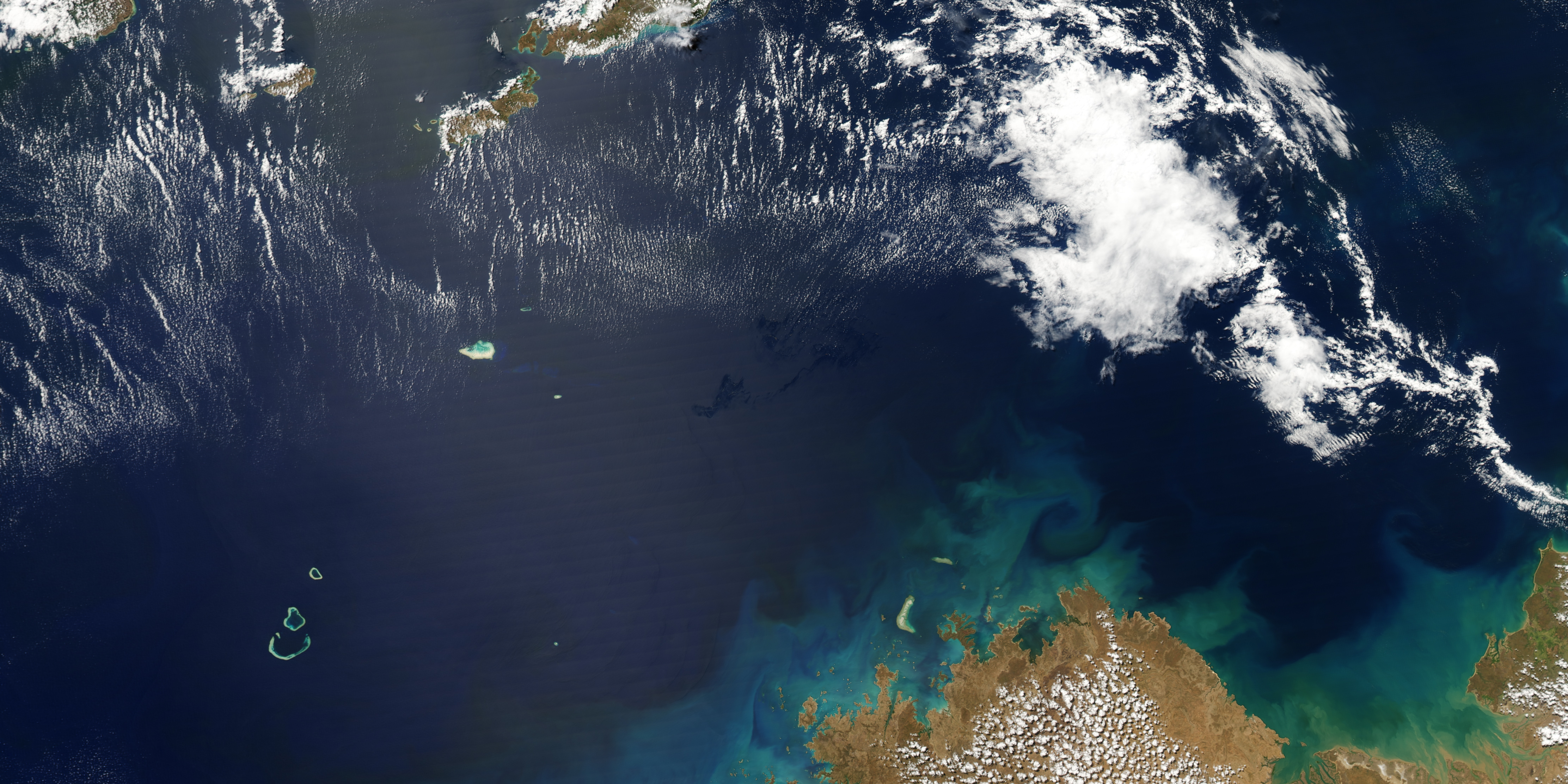
The site of the disaster- in the Timor Sea close to Australian and Indonesian coastlines, gave reason for great environmental concern as the introduction of large amounts of hydrocarbons could disrupt marine ecosystems. With mixed reports surfacing about the amount of oil initially spewing out of the well and the magnitude of the problem being larger than expected, several environmental groups were quickly becoming apart of the situation at hand. It is estimated that between 4000 - 30000 tonnes were spilled from the well
(WIKI).
There was a visual impact on marine wildlife with turtle, dolphins and other sea dwelling fauna seen swimming in oil slick. Bird species where also affected.

The maximum surface area of the oil slick was found to be 11183km² and no oil reached Australian or Indonesian coastlines (PTTEP).

Several environmental reports have been released and there are still long term studies in-place. Species impact data is scarce as there are reports with inconclusive results. Some Indonesian islands are said to have suffered damages such as income loss from depleted fish stock.
Wednesday, 20 April 2011
Ethical Issues
There are several issues concerning ethics revolving around the Montara oil spill. Comparing some of the guidelines in the Engineers Australia Code Of Ethics, some points can be drawn from this disaster.
Section 1 of the Code of ethics : Demonstrate Integrity; can be used to illustrate some interesting points;
Section 1.1 - Act on the basis of a well informed conscience
Section 1.2 - Be honest and trustworthy
When the drilling supervisor told the superintendent that the corrosion cap had been installed- he may not have been acting in accordance with this integrity. Or, the people working on the drill site at the time were not working under this regime. Only if he was certain that the cap was installed should he have reported to the superintendent that it was so, not on assumption. If the cap had been checked properly, then the leak may have been prevented altogether.
--------------------------------------------------------------------------------------------------------------------------------------
Section 2: Practise Competently
Section 2.1(b) - Act in a careful and diligent manner
2.3(a) - Practice in accordance with legal and statutory requirements, and with the commonly accepted standards of the day.
Section 3.3(c) - Communicate honestly and effectively, taking into account the reliance of others on engineering expertise.
Section 4: Promote sustainability
In regards to the environmental impacts, some of these criteria are not met. For example; was the adequacy of the response enough? What about planning ahead and preparations for an accident?
Initial reportings suggest that the magnitude of the oil spill was much larger than PTTEP had announced. PTTEP also did not have an Oil Spill Contingency Plan in place until after it had already began drilling operations at the Montara platform,which is a part of the environmental approval (PerthNow).
PTTEP spent over $5million on the environmental cleanup. The initial response being to spray chemical dispersant on areas of the slick, which increases dissolved hydrocarbons in the water column. It is worth mentioning that PTTEP have avoided other ethical issues by taking responsibility and ownership of their actions.
PTTEP spent over $5million on the environmental cleanup. The initial response being to spray chemical dispersant on areas of the slick, which increases dissolved hydrocarbons in the water column. It is worth mentioning that PTTEP have avoided other ethical issues by taking responsibility and ownership of their actions.
Controlling The Leak
A drilling rig was transported to the Montara platform to drill a relief well to intercept the leaking well. The leak came to an end by pumping heavy mud into the well and wellbore, alleviating pressure to stop the oil flow and cementing – ‘capping’ the leak (WIKI).
PTTEPAA had four unsuccessful attempts in plugging the leak but prevailed on the fifth. The operation was difficult and challenging as the relief well needed to intercept a small pipe 2600m below the seabed. Approximately 3400 barrels of the mud were pumped into the relief well to plug the leak. When the interception was made- as the initial attempt of pumping mud down the well was occurring the fir broke out on the well platform, causing further delays to the operation.
PTTEPAA had four unsuccessful attempts in plugging the leak but prevailed on the fifth. The operation was difficult and challenging as the relief well needed to intercept a small pipe 2600m below the seabed. Approximately 3400 barrels of the mud were pumped into the relief well to plug the leak. When the interception was made- as the initial attempt of pumping mud down the well was occurring the fir broke out on the well platform, causing further delays to the operation.

Sequence Of Events
The happenings at the Montara site raise questions of operational practice and regulations governing the drilling operation. It can be said that a lack of these may be a factor in the lead up to the leaking of the well.
It is believed that the cause of the leak was due to a pressure-containing corrosion cap not being installed. However the cap had been reported as being in place. PTTEP reported to the the Montara Commission of Inquiry that the cap was not on one of the four oil wells it was drilling at the time (WAtoday).
It is believed that the cause of the leak was due to a pressure-containing corrosion cap not being installed. However the cap had been reported as being in place. PTTEP reported to the the Montara Commission of Inquiry that the cap was not on one of the four oil wells it was drilling at the time (WAtoday).
Additionally reported is a major ethical issue; “The drilling Superintendent had been advised by the drilling supervisor on the West Atlas, in an email advice of offline activities at the time of the March 2009 suspension that the 340mm pressure containing corrosion cap was installed” (WAtoday).
This is a major factor in the causing of the leak, for if more strict codes of checking installations at drilling sites were in place and followed, then the disaster may have been prevented. Including the aftermath of the event.
This is a major factor in the causing of the leak, for if more strict codes of checking installations at drilling sites were in place and followed, then the disaster may have been prevented. Including the aftermath of the event.
References
PerthNow; http://www.perthnow.com.au/news/special-features/submissions-reveal-key-equipment-missing-at-site-of-massive-oil-spill-in-timor-sea/story-e6frg19l-1225819304531
PTTEP; http://www.au.pttep.com/upload/UPDATED%20PTTEPAA%20Media%20Release%201600%20-%2019.11.10.pdf
PTTEP; http://www.au.pttep.com/upload/UPDATED%20PTTEPAA%20Media%20Release%201600%20-%2019.11.10.pdf
The Disaster
The Montara Oil Spill has been described as one of the worst oil spills in Australia and rates as Australia’s third largest oil spill in history (RET). The incident occurred at the Montara wellhead platform, which is 250 kilometres north of Truscott, and 690 kilometres west of Darwin located in the Timor Sea on August 21, 2009 (ABC).
The platform itself is operated by PTTEP Australasia (Ashmore Cartier) Pty Ltd. The ‘oil spill’ itself is an oil and gas leak caused by a blow-out on the Montara platform’s wellhead, the result was a large oil slick which placed surrounding environment and marine ecosystems in danger. The situation had a turn of events on November 1st when the leaking well was finally intercepted; however a fire broke out on both the West Atlas rig and the Montara Wellhead Platform. On the 3rd of November, the fire was extinguished, and the leak was finally contained (RET) resulting in a total of 74 days since the blow-out.
Subscribe to:
Comments (Atom)